 How-to
How Can You Control Fire Ants Safely and Naturally?
Last Updated: October 25, 2026
Quick Summary
Fire ant control using natural methods like boiling water, beneficial nematodes, and spinosad can eliminate colonies without synthetic chemicals, though results take days to weeks and often require repeated applications since the queen may survive initial treatment.
- Boiling water kills 60-70% of the colony but requires 3-4 repeat treatments over 2-3 weeks for complete elimination
- Beneficial nematodes take two to four weeks to establish and work best in spring or fall in irrigated lawns
- Spinosad is effective as a targeted evening mound treatment but is toxic to bees and pollinators when wet
- Bait treatments work best when matched to the season: protein baits in spring and early summer, sugar baits in fall and winter
- Combine methods such as boiling water followed by bait or nematodes with monitoring for better results than single treatments
Table of Contents
- Identifying Fire Ants Before You Treat
- Natural Fire Ant Control Methods That Work
- Pet-Safe Fire Ant Control for Your Backyard
- Fire Ant Control Without Harming Plants and Pollinators
- Using Boiling Water for Fire Ant Mounds
- Bait Treatments and Timing for Colony Control
- When to Call a Professional for Fire Ant Control
- Frequently Asked Questions
Identifying Fire Ants Before You Treat
Fire ants are small, aggressive insects that build distinctive mounds in lawns and gardens.
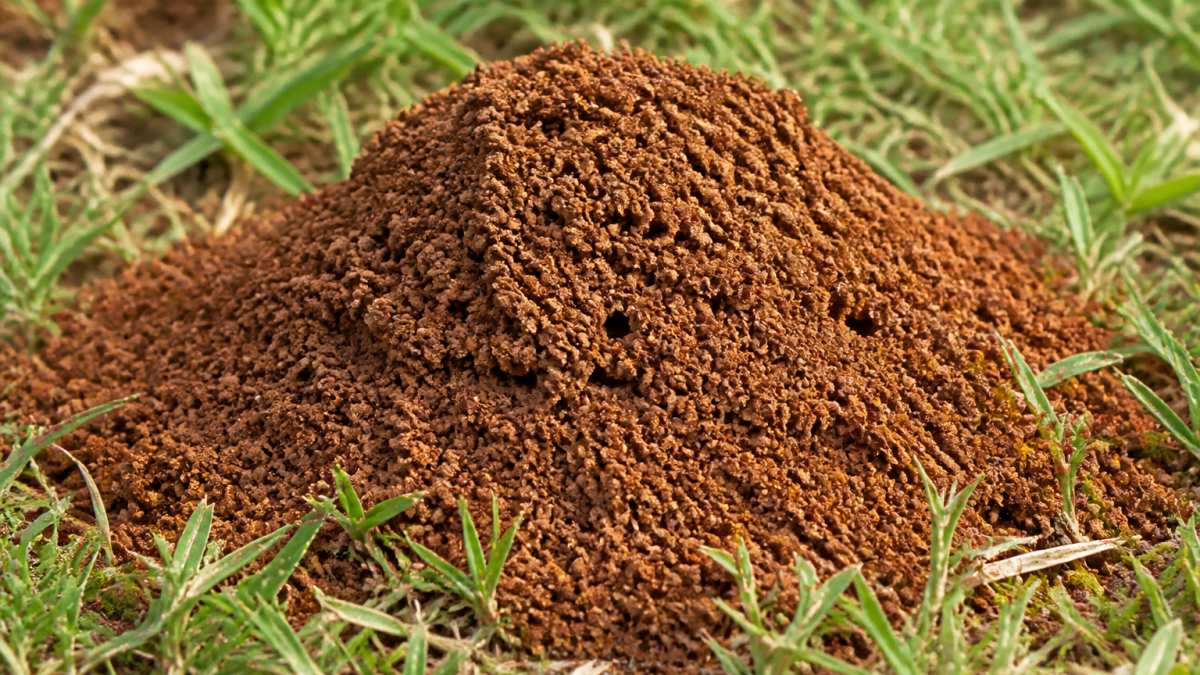
Fire ants are reddish-brown and about one-eighth inch long, smaller than carpenter ants (Treating Fire Ants in Your Home & Yard).
Their mounds are loose, crumbly soil with no visible entrance hole, unlike other ants, fire ants leave no central opening.
Common lookalikes to rule out:
- Carpenter ants (larger, black or brown, nest in wood)
- Pharaoh ants (tiny, pale yellow, form multiple small colonies)
- Pavement ants (dark brown, create flat mounds with visible center hole)
If unsure, avoid disturbing the mound. Simple test: place a stick near it and watch for aggressive swarming.
Natural Fire Ant Control Methods That Work
Natural fire ant control disrupts the colony without synthetic chemicals, but 'natural' is not a synonym for 'effective' or 'harmless.' These methods differ widely in speed, colony reach, and effects on non-target organisms, match one to your timeline, repeat-application tolerance, and the safety of children, pets, pollinators, and waterways.
Boiling water
- Mechanism: Contact heat kills ants and brood in the treated portion of the mound.
- Time to results: Immediate knockdown; partial colony reduction within hours.
- Efficacy: Kills many ants, but the queen often survives deep in the mound. Expect retreats over two to three weeks.
- Risks: Kills grass and desirable plants; scald risk; labor-intensive for multiple mounds.
- Best use: Small numbers of visible mounds in turf where plant damage is acceptable.
Diatomaceous earth (food-grade)
- Mechanism: Abrasive silica damages the exoskeleton's waxy layer, causing dehydration.
- Time to results: Slow, days to weeks, only where ants contact the powder.
- Efficacy: Inconsistent; fire ants often forage under debris and may not pick up enough dust. Works best dry.
- Risks: Lung irritant if inhaled; can affect lady beetles and lacewings; pool-grade diatomaceous earth is a different product and should not be used.
- Best use: Perimeter dusting around mounds or entry points, not stand-alone colony treatment.
Beneficial nematodes
- Mechanism: Microscopic roundworms parasitize ant larvae and pupae in the soil.
- Time to results: Two to four weeks as populations establish.
- Efficacy: Variable, depends on soil moisture, temperature, and species matching. Some products target ants generally, not fire ants specifically.
- Risks: Must be applied to moist soil and kept moist; UV and dry conditions kill nematodes.
- Best use: Spring or fall in irrigated lawns as part of an integrated plan.
Spinosad
- Mechanism: Fermentation-derived insecticide affecting the nervous system of insects that ingest or contact it.
- Time to results: Hours to a few days for exposed ants.
- Efficacy: Effective as a mound drench or bait component when used as directed; overuse reduces effectiveness and affects non-target insects.
- Risks: Toxic to bees and pollinators when wet; should not be applied to flowering plants or during pollinator activity.
- Best use: Targeted evening mound treatment, away from blooming plants.
Cinnamon, spices, and household repellents
- Mechanism: Repellency, not colony elimination.
- Time to results: Immediate avoidance, but ants often relocate or return.
- Efficacy: Low for eliminating colonies; short-term deterrent only.
- Best use: Discouraging ants from a specific entry point, not treating an active mound.
Baking soda and powdered sugar
- Mechanism: Anecdotal; proposed digestion disruption, but evidence for colony elimination is limited.
- Time to results: Weeks, if at all.
- Efficacy: Unreliable; many colonies ignore the mixture or feed selectively.
- Best use: Not recommended as a primary treatment.
A common mistake is expecting instant results. Colonies contain thousands of ants and a queen that can live for years. Combine methods, a boiling-water knockdown followed by bait or nematodes, with monitoring for rebound mounds. For predictable elimination, targeted bait or professional treatment beats repeated household remedies.
These natural methods differ in how they work, how quickly they act, and what they affect beyond fire ants.
| Method | Mechanism | Time to Results | Best Use |
|---|---|---|---|
| Boiling water | Contact heat kills ants and brood | Immediate knockdown; partial reduction in hours | Small numbers of visible mounds in turf |
| Diatomaceous earth | Abrasive silica damages exoskeleton | Days to weeks where ants contact powder | Perimeter dusting around mounds |
| Beneficial nematodes | Parasitize ant larvae and pupae | Two to four weeks as populations establish | Spring or fall in irrigated lawns |
| Spinosad | Fermentation-derived insecticide affecting nervous system | Hours to a few days for exposed ants | Targeted evening mound treatment |
| Cinnamon and spices | Repellency only, not elimination | Immediate avoidance; ants often return | Discouraging ants from entry points |
| Baking soda and sugar | Proposed digestion disruption; evidence limited | Weeks, if at all | Not recommended as primary treatment |
Pet-Safe Fire Ant Control for Your Backyard
Pets are naturally curious about mounds and can be stung repeatedly.
Boiling water is pet-safe once cool. Restrict pet access during application; afterward the area is safe immediately.
Diatomaceous earth (food-grade) is safe for pets and humans once settled; avoid breathing the dust during application.
Beneficial nematodes pose no risk to pets; they target only specific insect larvae.
Avoid these around pets:
- Synthetic pyrethroids (toxic to cats and some dogs)
- Organophosphates (dangerous to all animals)
- Permethrin-based products (especially harmful to cats)
If your pet is stung, wash the area with soap and water.
At Floridian Mosquito Control, we understand that pet safety is non-negotiable.
Fire Ant Control Without Harming Plants and Pollinators
Pollinator gardens and native plantings deserve protection too.
Broadcast treatments (spreading granules across the lawn) risk harming pollinators if applied during flowering.
Diatomaceous earth affects fire ants but also harms beneficial insects like ladybugs and lacewings on direct contact.
Beneficial nematodes are the safest choice for pollinator gardens.
Spinosad affects a broader range of insects but breaks down rapidly in sunlight, dissipating within 24-48 hours.
Plant-level risks:
- Boiling water kills grass and plants it contacts directly
- Granular baits can be absorbed by roots if applied too close to plantings
- Some sprays damage foliage if applied during heat stress
The key principle: treat the mound, not the entire yard.
Using Boiling Water for Fire Ant Mounds
Boiling water is direct, immediate, and requires no special equipment.
How it works: The heat kills ants and the queen on contact, penetrating the mound's structure to reach deeper chambers.
Step-by-step application:
- Boil water in a large pot or kettle (at least 2-3 gallons)
- Identify the mound's center and any visible tunnels
- Pour the boiling water slowly and steadily onto the mound
- Cover the entire mound surface, working from edges toward the center
- Watch for ants fleeing the mound, this confirms you've reached the colony
- Allow the area to cool completely before allowing foot traffic
Critical timing considerations:
Treat mounds early morning or late evening when most ants are inside. Midday applications miss foraging workers.
Realistic expectations:
One treatment kills 60-70% of the colony. The queen often survives if she's deep enough.
Watch out: Boiling water kills grass and plants it contacts.
Bait Treatments and Timing for Colony Control
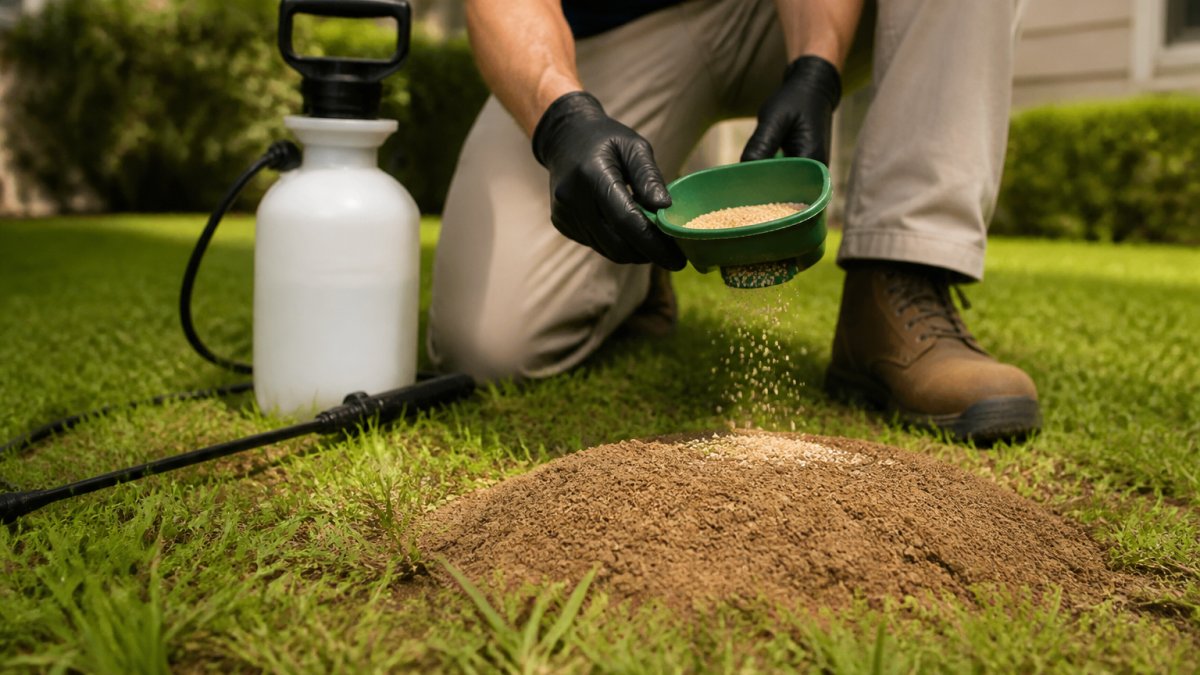
Bait treatments exploit the colony's own food-sharing behavior to distribute the active ingredient throughout the population, including the queen.
Know which fire ant you have
How fire ant baits work
Types of bait formulations
- Protein-based baits work best in spring and early summer when colonies focus on protein for brood development.
- Sugar-based baits work best in fall and winter when colonies shift to carbohydrate sources.
- Combination baits offer year-round convenience but may work less efficiently than season-matched options.
Application method
Apply bait granules around the mound perimeter and lightly over the surface, following the label rate exactly.
Timing matters significantly
- Spring (March-May): Use protein baits when ants are raising brood. Foraging is active and colonies are growing.
- Summer (June-August): Baits work more slowly in heat and dry soil; focus on mound treatments and maintain moisture where possible.
- Fall (September-November): Switch to sugar baits as colonies prepare for winter and shift foraging preferences.
- Winter: Baits work poorly in most areas; use alternative methods and plan for spring.
Weather conditions affect results
Baits work best when soil moisture is moderate. Dry soil makes ants reluctant to forage; heavy rain washes baits away.
Label and regulatory constraints
Fire ant baits are registered pesticides, and the label is the law.
Realistic timeline and retreatment criteria
Expect one to two weeks before decline; full elimination can take two to three weeks. Monitor treated mounds at seven and fourteen days: a mound still active after two weeks, or new mounds within a few feet, means retreat or switch methods. Keep a log of treatment dates, products, and mound locations to avoid repeating ineffective applications.
State extension offices publish fire ant species maps and bait timing guidance
When to Call a Professional for Fire Ant Control
Some situations demand professional expertise. Knowing when to call saves money and ensures effective results.
Call a professional when:
- Infestations cover more than half your yard (indicating multiple mature colonies)
- You've tried multiple methods without success over several months
- Mounds appear near structures, drains, or electrical equipment where DIY treatment poses safety risks
- You have severe allergies to fire ant stings and need guaranteed results
- You're managing a commercial property or event space requiring rapid control
What professionals bring:
At Floridian Mosquito Control, our licensed technicians combine fire ant expertise with broader pest management knowledge.
Cost-benefit analysis:
Professional treatment costs more upfront but often saves money long-term by preventing reinfestation and avoiding repeated failed attempts.
Fire ant control doesn't require harsh chemicals or extensive expertise. Start with identification, then choose a method matching your timeline and safety priorities.
Frequently Asked Questions
What is the most effective eco-friendly way to treat fire ant mounds?
Bait treatments using insect growth regulators offer the best balance of effectiveness and environmental safety. These baits target the colony's queen and larvae, disrupting reproduction. Boiling water provides immediate results on individual mounds but requires direct contact and poses safety risks. For lasting eco-friendly fire ant control, broadcast baits applied during cooler weather (early morning or late afternoon) reach multiple mounds and reduce reinfestation rates significantly more than single-mound treatments.
Are natural fire ant treatments safe for pets?
Many natural fire ant control methods are pet-safe, but application matters. Diatomaceous earth (food-grade only), cinnamon, and certain botanical oils pose minimal risk when applied away from pet eating and sleeping areas. Bait stations designed for broadcast application are safer than direct contact treatments. Always keep pets indoors during application and allow treated areas to dry completely. If you're uncertain about a product's safety, consult your veterinarian or a licensed pest professional before application.
Can boiling water kill fire ants?
Yes, boiling water kills fire ants on contact and can eliminate an entire mound if poured directly into the nest entrance. However, this method has significant limitations: it only works on individual mounds you can locate, requires extreme caution to avoid burns, and provides no residual protection against reinfestation. Boiling water is most effective as part of a broader fire ant control strategy, not as a standalone solution for lawn-wide infestations.
How can I control fire ants without harming plants and pollinators?
Choose application methods that target ants specifically without broad-spectrum toxicity. Bait formulations applied as granules on soil avoid direct contact with foliage and flowers. Apply treatments early morning or late afternoon when pollinator activity is lowest. Avoid spray applications near flowering plants. Boiling water and diatomaceous earth affect only ants in direct contact. Professional eco-friendly treatments using plant-safe formulations and proper placement protect your garden while controlling fire ant colonies.