 How-to
How to Identify Mosquito Larvae in Water
Quick Summary
Mosquito larvae are small, legless, wormlike insects, usually 4 to 10 millimeters long, that hang just below the water surface. Look for a thin, dark body and a short breathing tube at the rear that breaks the surface. They wriggle quickly when disturbed and dive to the bottom before returning to breathe.
- Mosquito larvae are usually 4 to 10 millimeters long when fully grown.
- A breathing tube at the rear end, held at the surface, is the easiest feature to spot.
- Tadpoles swim with a flat tail, while mosquito larvae have no tail and do not have legs.
- Water boatmen swim on their backs and carry an air bubble, unlike the surface-hanging larva.
- Weekly checks matter because larvae can develop from egg to pupa in about a week.
Table of Contents
- What Mosquito Larvae Look Like in Water
- Where Mosquito Larvae Live and How They Move
- Mosquito Larvae vs Tadpole: How to Tell Them Apart
- Mosquito Larvae vs Water Boatmen and Other Lookalikes
- Checking for Mosquito Larvae in a Pool or Pond
- What Kills Mosquito Larvae and When to Act
- Getting Professional Help With Your Standing Water Problem
- Frequently Asked Questions
How to Identify Mosquito Larvae in Water
Last Updated: November 22, 2026
What Mosquito Larvae Look Like in Water
Standing water is the single most common place homeowners find mosquito larvae, and most people never look closely enough to see them. Mosquito larvae are small, legless, wormlike insects, usually 4 to 10 millimeters long when fully grown, with a distinct head, a thorax, and a segmented abdomen. CDC guidance on mosquito biology and larval development
Look for a dark, thread-like body that hangs just below the water surface. The larva's breathing tube, called a siphon, sticks up through the surface film so it can take in air. This is the easiest feature to spot. Many people mistake a larva hanging at the surface for a bit of debris until it wriggles.
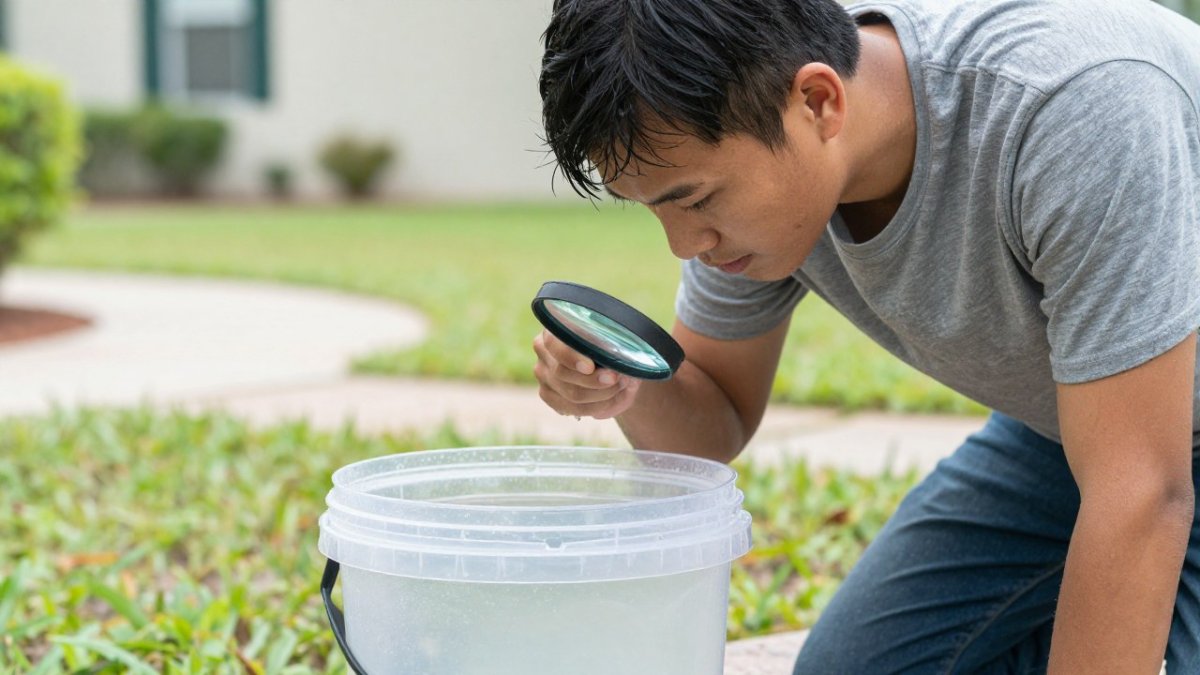
What to look for:
- A thin, dark, wormlike body with no legs
- A short breathing tube at the rear end, held at the surface
- Quick, jerky wriggling when disturbed
- A head that sits at a slight angle when feeding
Larvae shed their skin several times as they grow. Each growth stage is called an instar. Early instars are tiny and easy to miss, so check water containers often, especially after rain.
Where Mosquito Larvae Live and How They Move
Mosquito larvae need still or slow-moving water to survive. They are found in birdbaths, flower pots, gutters, tire swings, pet bowls, and clogged drains. Even a bottle cap of water can hold a developing batch. University of Florida IFAS extension guidance on backyard mosquito habitats
Larvae feed on algae, bacteria, and tiny organic particles near the surface and the bottom. They move by wriggling in short bursts. When startled, they dive quickly to the bottom and then return to the surface within a minute or so.
Watch the water for a few minutes. If you see small dark bodies that move in a zigzag pattern and rise to breathe, you are likely looking at mosquito larvae.
Mosquito Larvae vs Tadpole: How to Tell Them Apart
Tadpoles and mosquito larvae both live in water, and both can look similar at a glance. The differences are clear once you know what to check.
| Feature | Mosquito Larva | Tadpole |
|---|---|---|
| Body | Thin, wormlike, no legs | Rounder body, may grow legs |
| Breathing | Breathing tube at the rear, at the surface | Gills or lungs, no surface tube |
| Movement | Quick, jerky wriggling | Slow, steady swimming with a tail |
| Size | Usually under 1 centimeter | Often larger, grows over weeks |
Tadpoles swim with a flat, paddle-like tail. Mosquito larvae do not have that tail. If the creature hangs at the surface with a visible tube, it is almost certainly a mosquito larva.
Mosquito Larvae vs Water Boatmen and Other Lookalikes
Water boatmen are a common lookalike in pools and ponds, and midge larvae, mayfly nymphs, damselfly nymphs, and small tadpoles are also sometimes mistaken for mosquito larvae. Comparing body shape, legs, surface position, and breathing structures is a practical way to tell them apart.
Check 1, Body shape. A mosquito larva is thin and wormlike, with a distinct head, a wider thorax, and a segmented abdomen. It has no legs at any stage. Water boatmen have a flattened, oval body with a visible wing pad on the back.
Check 2, Legs. Mosquito larvae have none. Water boatmen have oar-like hind legs that they use to row. Mayfly nymphs have six legs and gills along the sides of the abdomen. Damselfly nymphs have six legs and three leaf-like tail appendages.
Check 3, Surface position. Mosquito larvae hang head-down just under the surface film, with the rear end at the top. Water boatmen swim on their backs, often at mid-depth or near the bottom, and surface only to grab air.
Check 4, Breathing structures. A mosquito larva has a short siphon tube at the rear that breaks the surface. Water boatmen carry a silvery air bubble under the wings and do not use a rear tube. Midge larvae have no siphon. Mayfly nymphs have external gills along the abdomen.
Here is the same comparison in table form:
| Feature | Mosquito Larva | Water Boatman | Midge Larva | Mayfly Nymph |
|---|---|---|---|---|
| Body | Thin, wormlike, segmented | Flattened, oval | Thin, wormlike, often red | Stout, wing buds |
| Legs | None | Oar-like hind legs | None | Six legs |
| Surface position | Hangs head-down at surface | Swims on back, mid-depth | Bottom or debris | Bottom or plants |
| Breathing | Rear siphon tube | Air bubble under wings | No siphon | Abdominal gills |
| Movement | Jerky wriggle, quick dive | Rowing, steady | Slow crawling | Crawling, darting |
A common pattern is that people spot a wriggling shape at the surface and assume mosquito larva, when the specimen is actually a water boatman that surfaced for air. Watch the specimen for 30 seconds before deciding.
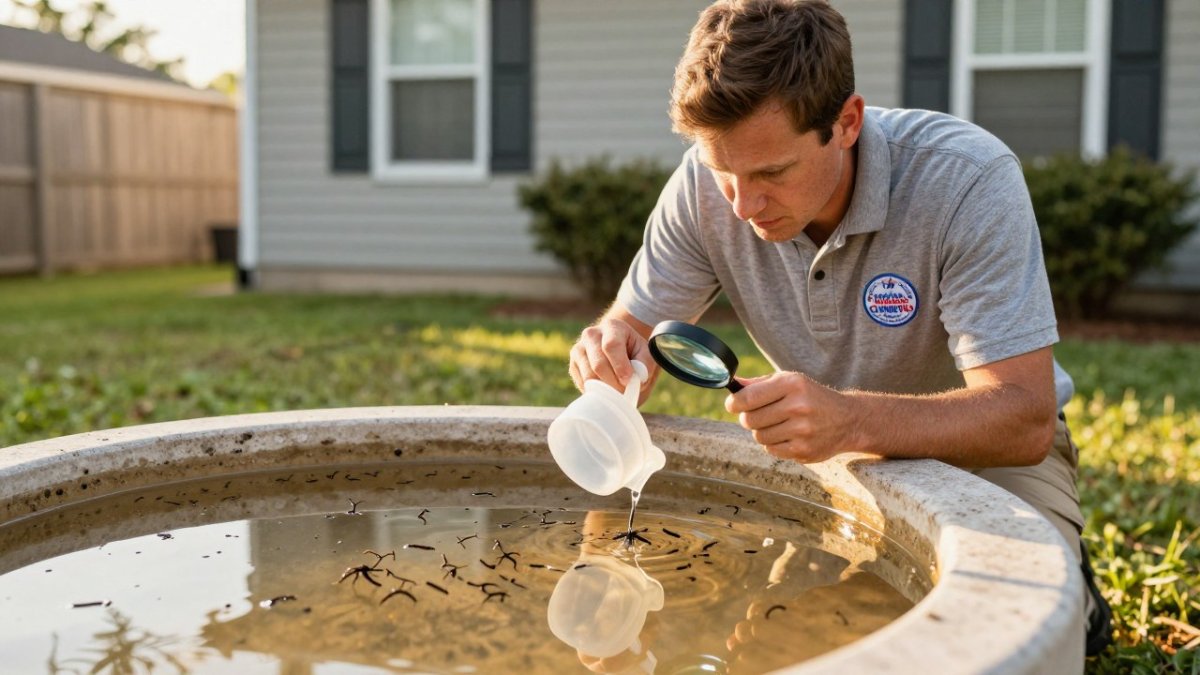
When you are unsure, collect a small sample in a clear cup and view it against a dark background in good light. A magnifying glass or a phone camera zoom helps confirm the siphon and the absence of legs.
Checking for Mosquito Larvae in a Pool or Pond
Pools and ponds can hold larvae even when the water looks clean. Larvae concentrate at the edges, in shaded corners, under leaf piles, in pump housings, in skimmer baskets, and in any spot where water sits still for several days.
Sample safely. Wear gloves, and do not put your bare hands into water you have not inspected, especially in a pool that has been stagnant or in a pond with visible algae.
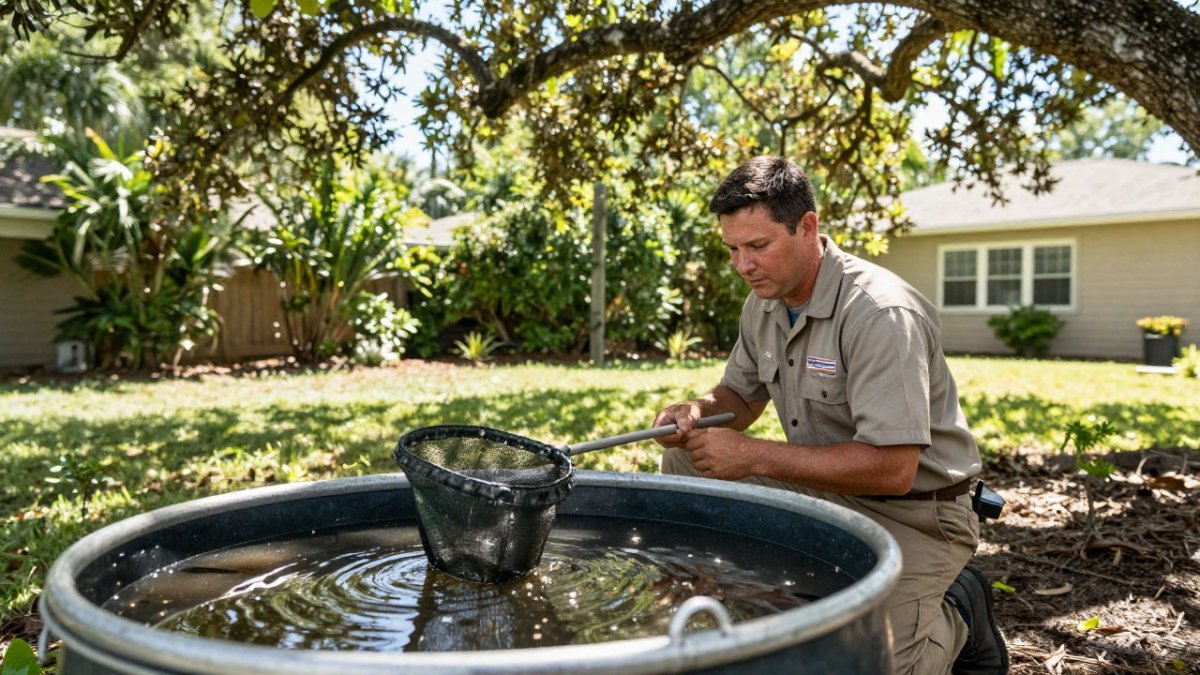
Collect from three zones. Scoop from the edge, from a shaded corner, and from the middle or a still pocket near a pump or skimmer. Take about a cup from each zone. Larvae are not evenly distributed, so a single scoop can miss a batch.
Let the sample settle. Set each cup on a level surface in good light and wait two minutes. Larvae rise to the surface to breathe. Look for small dark bodies hanging head-down with the rear end at the surface film.
Inspect closely. View the cup against a dark background, such as a black shirt or a piece of dark paper. A magnifying glass, a jeweler's loupe, or a phone camera zoom helps confirm the siphon tube and the absence of legs.
Log what you find. Record the date, the location, and whether you saw larvae, pupae, or nothing. Repeat after heavy rain and after any period when the pool or pond was not circulating. A simple weekly log makes it easier to spot a recurring breeding site.
Here is a repeatable check you can run each week:
- Put on gloves and gather a long-handled scoop and three clear cups
- Sample the edge, a shaded corner, and a still pocket near equipment
- Let each cup sit two minutes in good light
- View against a dark background with a magnifier or phone zoom
- Photograph or video anything that wriggles
- Log the date, location, and result
- Repeat after heavy rain or after the pool has been idle
When identification is uncertain, do not treat the water. Take a focused photo or a short video of the specimen at the surface, note the location, and check with your local public-health or vector-control service before applying any larvicide.
Watch out: a single missed check can let a batch hatch. In warm weather, larvae can develop from egg to pupa in about a week, so weekly checks matter more than a single deep clean.
What Kills Mosquito Larvae and When to Act
Once you confirm larvae, act quickly. The most effective step is removing the water source. Empty containers, scrub birdbaths weekly, and clear gutters. Stagnant water left in place keeps the cycle going.
For water that cannot be emptied, such as a large pond or pool, larvicides designed for mosquitoes can break the cycle. If you would rather avoid chemical products, you can explore natural mosquito control approaches for Florida. Use products labeled for mosquito larvae and follow the label directions exactly. EPA overview of mosquito larvicide products and labeling
Act as soon as you find larvae. Waiting a few days can mean a new generation of biting adults.
Getting Professional Help With Your Standing Water Problem
If larvae keep returning, or your yard has many hard-to-reach water spots, professional help can save time. Our complete guide to mosquito control services explains what a provider can handle for you. Floridian Mosquito Control is a locally owned and operated family business serving Pinellas and Hillsborough counties. Our licensed technicians use eco-friendly products, including 100% natural options, and can install automatic misting systems. You can call or text 813-433-3464 to talk through your situation.
For pricing, reach out for a quote, since costs depend on the services you need. If you are comparing providers, this guide on choosing a mosquito control company in Florida walks through what to look for.
Next step: Start with a walk around your property today and empty any standing water you find. If the problem keeps coming back, call or text Floridian Mosquito Control at 813-433-3464 for help.
Frequently Asked Questions
What kills mosquito larvae in water instantly?
No single household method kills larvae instantly in every case. Draining or removing the standing water is the fastest way to eliminate them, since larvae cannot survive without water for long. Larvicides containing Bacillus thuringiensis israelensis (Bti) are a common, targeted option for ponds and other water features that cannot be emptied, and they affect mosquito and some fly larvae while leaving most other wildlife largely unharmed. Check the product label for the correct dose and whether it is safe for fish, pets and pollinators in your yard before applying. Visit the Floridian Mosquito Control website for current service options and a quote.
How can you tell mosquito larvae from tadpoles?
Mosquito larvae are legless and wormlike with a visible head, a thorax and a segmented abdomen, and they usually hang upside down at the surface, breathing through a siphon at the tail end. Tadpoles have a round, bulbous body with a tail fin and no visible breathing tube, and they swim by moving their tail side to side rather than wriggling in quick jerks. Tadpoles also tend to graze on algae near the bottom or edges, while mosquito larvae feed on microscopic organisms and debris near the surface. If the creature is actively jerking and hanging from the surface film, it is almost certainly a mosquito larva.
How can you tell mosquito larvae from water boatmen?
Water boatmen are true bugs, so they have a hard, oval body, two large rear legs that look like oars, and they swim on their backs or sides rather than hanging from the surface. They also swim through the water instead of wriggling, and they have no breathing siphon. Mosquito larvae are soft, pale and worm-shaped with no legs, and they stay near the surface using their siphon to breathe. Water boatmen commonly appear in ponds and pools with aquatic plants and are generally harmless to people, while mosquito larvae signal that the water is a breeding site.
Will removing mosquito larvae from water kill them?
Removing larvae from water does not reliably kill them, because many will survive for a time out of water if they remain moist. Scooping them out and tossing them onto dry ground is not an effective control step. The more dependable approach is to eliminate the standing water itself by emptying containers, clearing gutters and turning over tarps, and to treat any water that must remain, such as ponds or ornamental features. Checking the water regularly for wriggling larvae helps you confirm that the control measures are working.