 How-to
7 Steps to Stop Mosquitoes Breeding in Your Yard
Quick Summary
The most effective way to stop mosquitoes breeding yard areas is to find and remove standing water before larvae hatch. Walk your yard after rain, tip out or cover containers, clear gutters, and empty birdbaths weekly. Water you cannot drain can be treated with a larvicide such as Bti or methoprene.
- A bottle cap of rainwater can be enough for a female mosquito to lay eggs.
- Eggs can become biting adults in as little as a week in warm weather.
- Clean clogged gutters and downspouts at least twice a year, more often under large trees.
- Empty and scrub birdbaths and pet bowls at least once or twice a week.
- Bti kills larvae within hours to a day; methoprene stops development into adults.
Table of Contents
- How Mosquitoes Breed in Your Yard and Why It Matters
- Step 1: Walk Your Yard and Find Every Mosquito Breeding Site
- Step 2: Tip, Toss, or Store Water-Holding Containers
- Step 3: Clean Gutters, Refresh Birdbaths, and Check Plant Saucers
- Step 4: Treat Water That Cannot Be Drained With a Larvicide
- Step 5: Keep Pets and Wildlife Safe While You Control Mosquitoes
- Step 6: Troubleshoot Mosquitoes That Return After Standing Water Is Removed
- Scheduling Your Next Yard Check With Floridian Mosquito Control
- Frequently Asked Questions
How Mosquitoes Breed in Your Yard and Why It Matters
Mosquitoes need only a small amount of water to breed. A bottle cap of rainwater can be enough for a female to lay eggs. Stopping mosquitoes breeding yard activity means finding and removing those water sources before the larvae hatch.
The life cycle moves fast. Eggs hatch into larvae in the water, larvae become pupae, and adults emerge in as little as a week in warm weather. That is why a yard can go from zero mosquitoes to a swarm in a short time. Florida's heat and humidity make the cycle even quicker.
Only female mosquitoes bite, and they need blood to develop their eggs (the CDC). Adults also rest in shaded, damp vegetation during the day. So yard control works best when you cut out breeding water and reduce the cool, shady spots where adults hide.
The steps below walk you through a practical plan you can start this week.
Step 1: Walk Your Yard and Find Every Mosquito Breeding Site
Start with a slow walk around your property after a rain to find every mosquitoes breeding yard hotspot. Look at every low spot, container and shaded corner. Bring a flashlight to check under decks, inside shrubs and in the bottom of pots.
Common breeding sites include:
- Clogged gutters and downspouts
- Birdbaths and pet bowls
- Plant saucers and planters
- Old tires, buckets and toys
- Tarps that trap water
- Low spots in the lawn and ditches
- Ponds, fountains and rain barrels
Watch out: a single container can produce hundreds of mosquitoes if it holds water for a week or more.
Step 2: Tip, Toss, or Store Water-Holding Containers
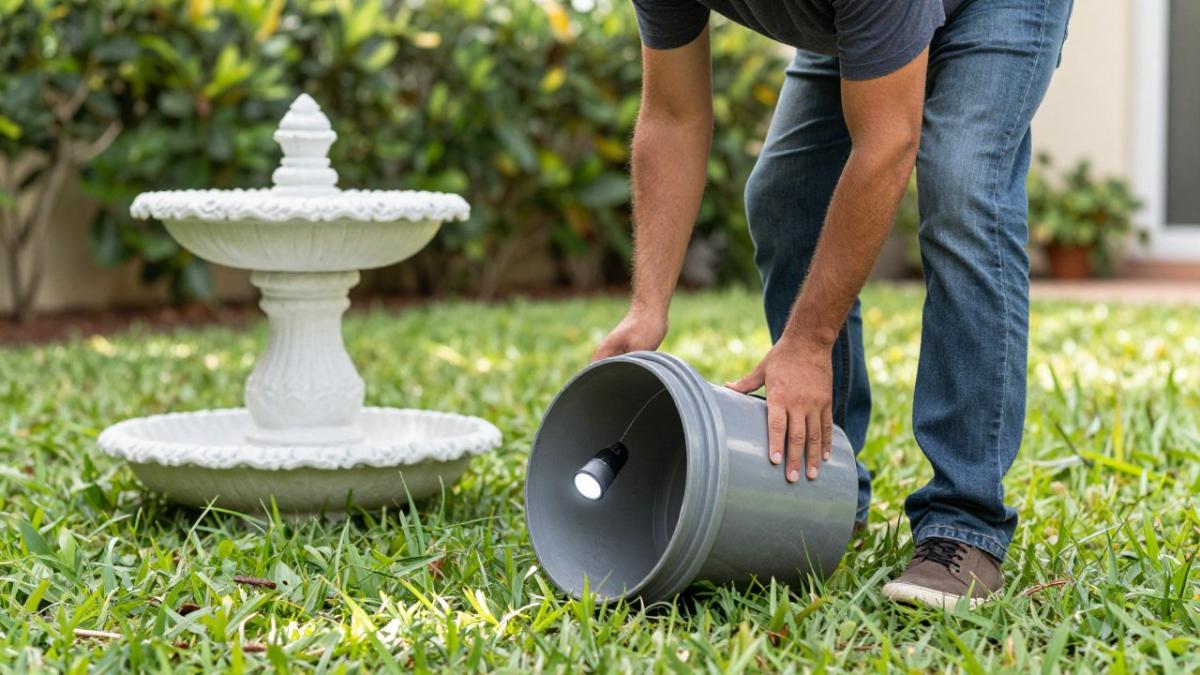
Tip out anything that holds water. Turn buckets, wheelbarrows and kiddie pools upside down when not in use. Toss broken items that cannot be emptied, like old tires or cracked pots. Store useful containers under a roof or cover them tightly so rain cannot fill them.
Make it a habit to check the same spots on the same day each week.
Step 3: Clean Gutters, Refresh Birdbaths, and Check Plant Saucers
Clogged gutters hold water and debris that mosquitoes love. Clear them at least twice a year, and more often under large trees. Flush downspouts so water drains away from the house.
Birdbaths and pet bowls should be emptied and scrubbed at least once or twice a week. Fresh water is less attractive to egg-laying females and does not give larvae time to develop. Plant saucers should be emptied after watering or filled with sand so water does not stand.
Step 4: Treat Water That Cannot Be Drained With a Larvicide
Some water cannot be removed, such as ponds, rain barrels, clogged drainage areas, or a low spot that always holds water. For these, a larvicide is the right tool because it kills mosquitoes in the larval stage, before they can fly and bite.
Bti is a naturally occurring bacterium. When a mosquito larva eats the treated water, the toxin in Bti damages its gut and the larva dies within hours to a day. It is specific to mosquito and some fly larvae, which is why it is widely used in ponds and water gardens. Methoprene is an insect growth regulator: it does not kill larvae outright but prevents them from developing into adults, so they die at the pupal stage. Methoprene persists longer in water than Bti, which makes it useful for containers that are hard to reach or refill slowly.
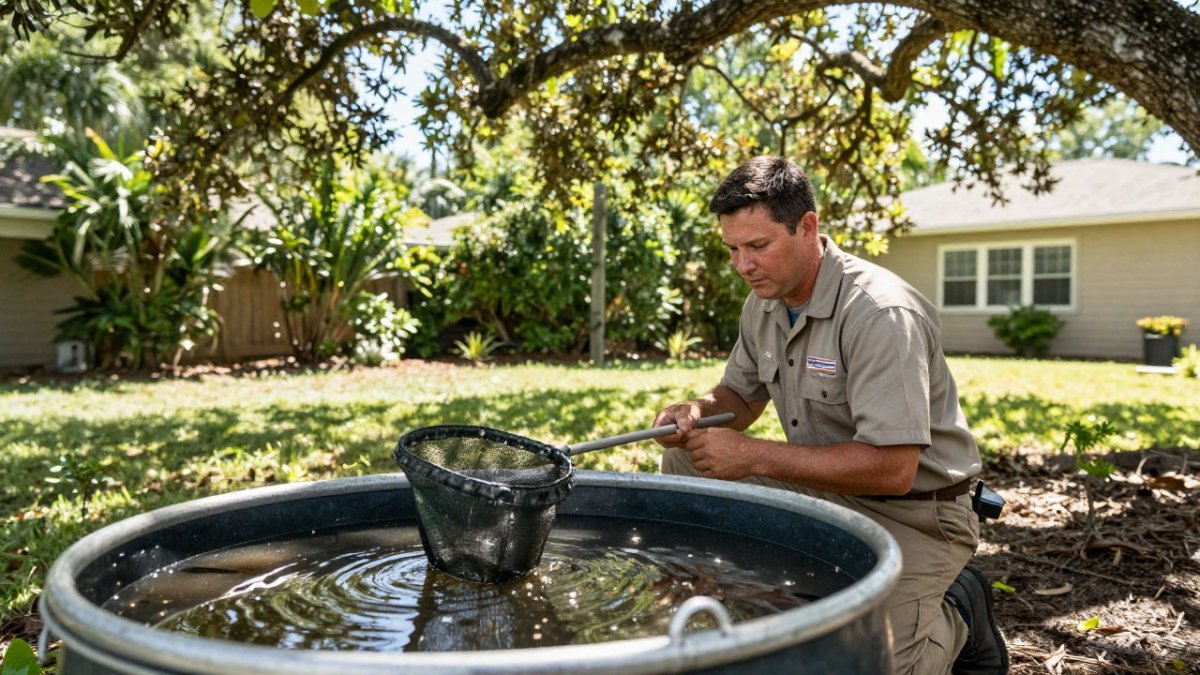
Match the product form to the water source. Mosquito dunks and briquets are pressed blocks that release Bti slowly and are sized for small ponds, rain barrels, and animal water troughs; read the label because formulations vary. Granules and pellets sink and are better for shallow, vegetated water where larvae hide. Liquid concentrates are for larger or irregular water bodies and require measuring by volume.
Always follow the product label for dose, timing, and reapplication. Reapply Bti products more often in warm weather or after heavy rain dilutes the water, and reapply methoprene on the interval the label states. Do not double the dose to stretch the interval; that wastes product and does not improve control.
Watch out: larvicides are pesticides, and the label is the law. Do not treat water that is used for drinking, and check the label before using any product in water that contains fish, frogs, or other wildlife you want to keep. Read the label for each product, since precautions can differ between products rather than assuming they are interchangeable. Keep larvicides out of reach of children and store them as directed, away from food and pet supplies.
EPA guidance on mosquito larvicides and Bti
PAGE LINK: Learn about larvicide options for standing water that cannot be drained
Some standing water cannot be drained, so the article recommends a larvicide. The table summarises the two main options it describes.
| Larvicide | How it works | Key difference |
|---|---|---|
| Bti | Toxin damages larva's gut; larva dies within hours to a day | Specific to mosquito and some fly larvae |
| Methoprene | Insect growth regulator stops development into adults | Persists longer in water than Bti |
Step 5: Keep Pets and Wildlife Safe While You Control Mosquitoes
Pet owners and nature lovers often ask whether mosquito control is safe for animals. Choose products labeled for the use you need, and follow directions closely. Choose products labeled for the use you need, and avoid spraying water sources that wildlife depends on.
Avoid broad fogging near pollinator gardens when you can. Focus on removing water and treating breeding sites rather than spraying the whole yard. Keep pets away from freshly treated areas until the product has dried or settled, as the label directs.
PAGE LINK: Read more on mosquito control methods that are safe for dogs and pets
PAGE LINK: See how to reduce mosquitoes without harming bees and pollinators
Step 6: Troubleshoot Mosquitoes That Return After Standing Water Is Removed
Sometimes mosquitoes come back even after you clear every container. Before you assume the yard work failed, remember the life cycle: eggs can hatch and larvae can become biting adults in as little as a week in warm weather, and some eggs survive drying and hatch when water returns. That timing is why a one-time cleanup rarely holds, and why the fix is a repeatable inspection routine rather than a single sweep.
Run the same route every week so you check the same spots in the same order. A practical route covers five zones:
- Gutters and roofline. Clogged gutters and downspouts are the most commonly missed source. Flush them and confirm water drains away from the house.
- Containers and storage. Buckets, planters, saucers, toys, tarps, and wheelbarrows. Tip, toss, or store them so rain cannot collect.
- Drains and low spots. Check French drains, window wells, AC drip pans, and any lawn depression that stays wet for more than a few days.
- Water features and rain barrels. Ponds, fountains, birdbaths, and rain barrels need either frequent refreshing or a larvicide. Cover rain barrels with fine screen so females cannot lay eggs.
- Vegetation and shade. Adults rest in dense shrubs, tall grass, and shaded corners during the day. Trim and thin these areas to cut resting habitat.
Tie the schedule to the weather. Check containers within 24 to 48 hours after any significant rain, because that is when new water appears and when females are most likely to lay. Do a full route weekly during warm months, and step it up after storms. In cooler weather, the cycle slows and you can stretch the interval, but do not stop checking completely.
If mosquitoes persist after several weeks of consistent inspection, look for sources you cannot see from the yard. Common hidden sources include a neighbor's neglected pool or containers, a clogged storm drain, an irrigation system that leaks or oversprays, and standing water under a deck or in a crawl space. Adults can also fly in from nearby properties, so in a dense neighborhood yard work alone may not solve the problem. Trim vegetation where adults rest, keep yard edges clear, and consider professional help if the pattern continues.
PAGE LINK: Understand why mosquitoes can return after professional fogging and what to do next
Scheduling Your Next Yard Check With Floridian Mosquito Control
Stopping mosquitoes from breeding in your yard is a repeating job, not a one-time fix. A schedule keeps the work manageable. Check containers weekly, clean gutters twice a year and treat unavoidable water as needed.
If you want help, Floridian Mosquito Control offers professional mosquito control and misting system service across Pinellas and Hillsborough counties. Our licensed technicians can inspect your yard, treat breeding sites and set up a plan. Call or text 813-433-3464 to schedule a yard check.
PAGE LINK: Explore Floridian Mosquito Control's full range of mosquito control services
Frequently Asked Questions
What smell do mosquitoes absolutely hate?
No scent reliably drives mosquitoes away for long. Citronella, lemongrass, and peppermint oil offer only short-lived relief and wear off within an hour or two outdoors, especially with wind or heavy humidity. Scented candles and plant clusters add little protection. The most effective approach is removing the water mosquitoes need to breed, then using a registered repellent on skin and treating larvae in any water you cannot drain. Eliminating breeding sites does far more than any smell.
How often should I empty standing water to prevent mosquitoes?
Check and empty water-holding containers at least once a week, and after every heavy rain. Mosquito larvae can develop from egg to adult in about seven to ten days in warm Florida conditions, so a weekly schedule breaks the cycle before new adults emerge. Birdbaths and pet bowls should be dumped and scrubbed every two to three days, since fresh eggs can hatch quickly in warm water. Plant saucers, gutters, and tarp folds need checking after each storm.
Is mosquito larvicide safe to use around dogs?
Always follow the product label when using any larvicide around pets. Keep dogs away from treated water until the product has dried or settled as the label indicates, and never use a larvicide in a pet drinking bowl. Always read the label, since the registered use and safety statements are the legal standard. If you have questions about a specific product for your dog, ask your veterinarian before application.
What should I do if mosquitoes keep coming back after I removed standing water?
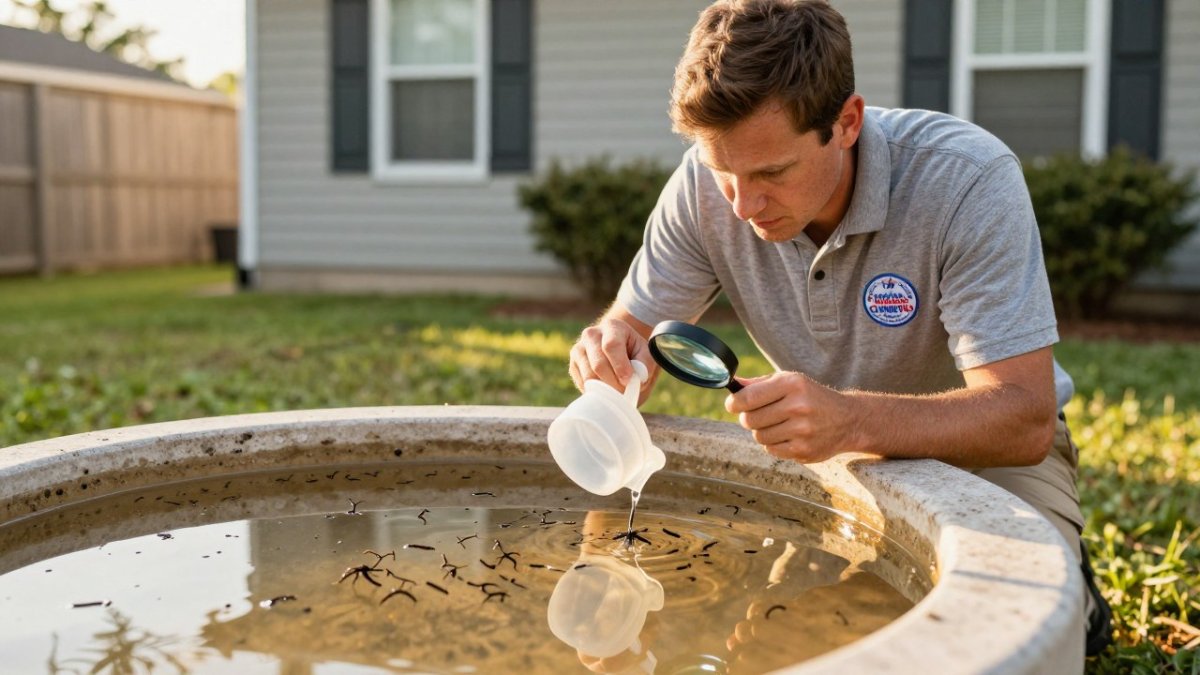
Persistent mosquitoes often come from hidden breeding sites you have not yet found, such as a clogged gutter, a leaky outdoor faucet, a tarp fold, or a neighbor's container near your fence. Re-walk the yard after rain, check dense shaded vegetation where adults rest, and inspect water that cannot be drained for larvae using a cup or dipper. If you still see large numbers after two weeks of consistent cleanup, schedule a professional inspection with Floridian Mosquito Control at 813-433-3464 for a quote tailored to your property.