 How-to
How to Control Mosquitoes Without Harming Bees
Last Updated: October 26, 2026
Quick Summary
Natural mosquito control eliminates breeding sites and targets larvae without harming pollinators. Remove standing water twice weekly, treat remaining water with Bti, and apply adult treatments only at dawn or dusk on resting sites away from blooms.
- Removing standing water eliminates 70-80% of mosquito breeding habitat within two weeks
- Bti is a naturally occurring bacterium that kills mosquito larvae safely and poses no risk to bees or butterflies
- Apply treatments at dawn before 7 AM or dusk after 6 PM when pollinators are inactive
- Mosquito larvae develop in 7-10 days in warm weather, so breaking the cycle requires action faster than development
- Dragonflies eat dozens of adult mosquitoes daily and provide free ongoing control when encouraged
Table of Contents
- Why Natural Mosquito Control Matters for Your Pollinator Garden
- Standing Water Mosquito Prevention: The Foundation of Control
- How to Control Mosquitoes Without Harming Bees
- Mosquito-Repellent Plants for Gardens: What Actually Works
- Encouraging Natural Predators and Garden Maintenance
- Inspecting Your Pollinator Garden and Treating Strategically
- Getting Professional Mosquito Control for Your Pollinator Garden
- Frequently Asked Questions
Why Natural Mosquito Control Matters for Your Pollinator Garden
Broad-spectrum sprays kill mosquitoes and pollinators indiscriminately. At Floridian Mosquito Control, we help homeowners protect against mosquitoes while being gentle on the local ecosystem.
Disease-carrying mosquitoes pose real health risks, but blanket insecticide applications wipe out your garden ecosystem.
Targeted, source-based strategies protect your family while preserving beneficial insects, more planning than spraying everything, but the results last longer.
Here's what you need to know to control mosquitoes without harming bees.
Standing Water Mosquito Prevention: The Foundation of Control
Standing water is where mosquitoes breed. Eliminate breeding sites and you eliminate most of your mosquito population before they ever become adults, the single most effective step you can take.
Mosquitoes lay eggs in standing water; eggs hatch into larvae, then pupae, then flying adults. The cycle takes 7-10 days in warm weather, so removing water before larvae mature breaks it (the CDC).
Identifying and Eliminating Breeding Sites
Walk your property and look for water that sits still. Common breeding sites include:
- Rain barrels and collection systems
- Birdbaths and pet water bowls left outside
- Potted plant saucers and flower pot bases

Empty standing water twice weekly. Drill drainage holes in pot saucers, unclog gutters, and grade low spots so water drains away.
This single step removes 70-80% of your mosquito breeding habitat. Most homeowners who focus here see dramatic population drops within two weeks.
When Water Must Stay: Using Bti Safely
Some water can't be removed. Ponds, rain gardens, and decorative water features are part of your landscape.
Bti works only in water: mosquito larvae ingest it and die, while pollinators flying overhead are completely safe.
Follow these safety steps:
- Apply Bti only to standing water where mosquitoes breed
- Use the product exactly as labeled
- Reapply every 7-10 days or after heavy rain
Bti is your best tool for managing water you can't drain, including ponds, screened rain barrels, and water gardens.
Mosquitoes breed in standing water; removing it eliminates 70-80% of breeding habitat within two weeks.
| Breeding Site | How to Eliminate |
|---|---|
| Rain barrels and collection systems | Cover with tight mesh screen |
| Birdbaths and pet water bowls | Empty twice weekly |
| Potted plant saucers and flower pot bases | Drill drainage holes |
| Clogged gutters and downspout areas | Unclog and clear |
| Low spots in yards that pool after rain | Grade so water drains away |
| Wheelbarrows, buckets, and tarps | Empty twice weekly |
| Tree holes and hollow logs | Remove or drain |
| Ponds and decorative water features | Treat with Bti every 7-10 days |
How to Control Mosquitoes Without Harming Bees
Timing and application method determine whether you protect or poison your garden. Most mosquito control fails because it's applied wrong, at the wrong time, or to the wrong target.
Timing and Application for Pollinator Safety
Spray only when pollinators are inactive.
Apply treatments at dawn (before 7 AM) or dusk (after 6 PM) so spray dries and settles before pollinators return.
Avoid spraying blooming flowers, since pollinators visiting for nectar and pollen are your target audience.
Never spray during rain or when rain is forecast within 24 hours; rain washes treatments away and increases drift and off-target exposure.
Target adult mosquitoes, not the entire garden.
Why Broad-Spectrum Spraying Damages Your Garden Ecosystem
Broad-spectrum insecticides don't distinguish between mosquitoes and beneficial insects.
When beneficial insects die, aphids, spider mites, and other pests multiply unchecked, so you end up spraying more, not less.
The ecosystem takes months to recover, and until beneficial insects repopulate, your garden stays vulnerable.
Targeted treatments avoid this trap: spray only where mosquitoes rest, use products that break down quickly, and apply when beneficial insects are inactive.
Mosquito-Repellent Plants for Gardens: What Actually Works
Most plant lists imply that growing citronella, lavender, or mint keeps mosquitoes off your patio. The evidence doesn't support that. Understanding why plants fail as repellents lets you use them honestly as a small part of a source-reduction plan, not a substitute for one.
The Mechanism: Volatiles, Not Presence
Mosquito repellency comes from volatile plant oils, citronellal, citronellol, geraniol, linalool, thymol, that interfere with the olfactory receptors mosquitoes use to locate a host.
A lemon-scented plant is not a repellent; it is a source of a repellent compound that must be extracted, concentrated, and applied to skin or clothing to matter. Extension and university guidance is blunt: no plant, planted or placed, provides reliable personal protection on its own.
What the Evidence Actually Shows
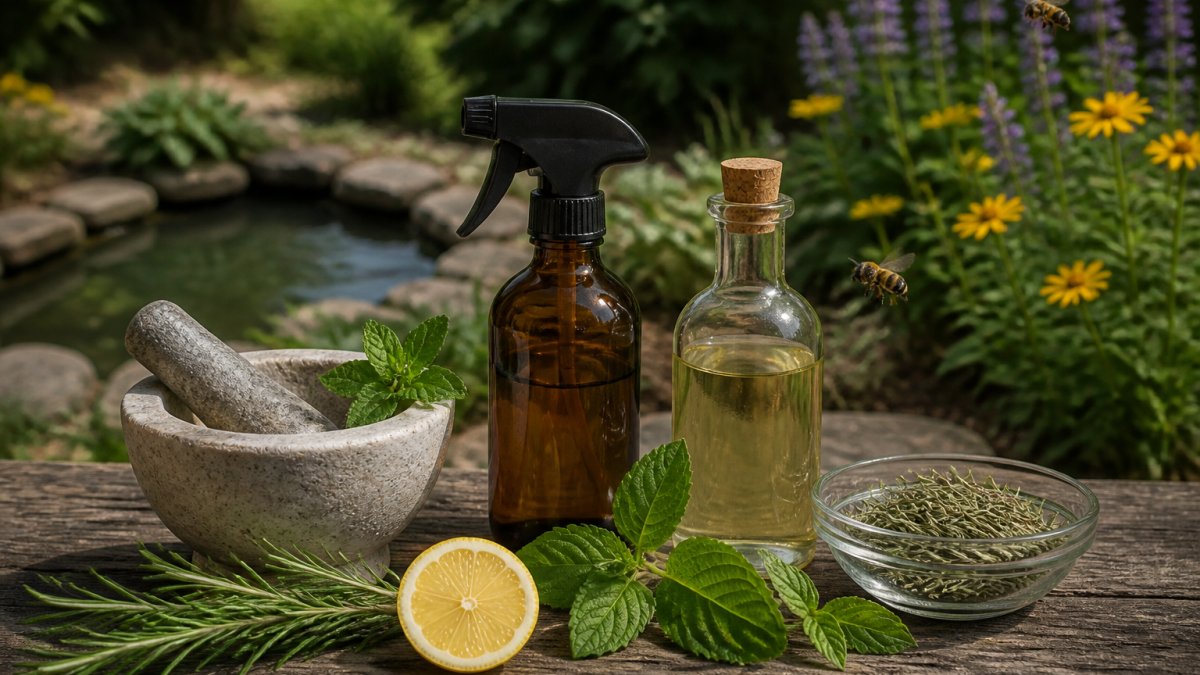
- Crushed or rubbed leaves release a short-lived burst of oil. Brushing rosemary or basil and holding the crushed leaves near you may briefly reduce landings, but the effect fades within minutes and is no substitute for a repellent.
- Burning or smoldering plant material (citronella coils, smudge sticks) produces smoke that can reduce biting nearby, but smoke is a respiratory irritant and the protection is highly localized and inconsistent.
- Citronella candles show measurable but modest, short-range effects in studies, and only when the plume reaches you. Wind, distance, and burn time erode the benefit.
How to Use Repellent Plants Realistically
Treat these plants as landscape and sensory elements with a minor, situational role, not control tools: Explore natural mosquito repellent options that complement these plant-based strategies.
- Plant them where you sit, not where you hope they'll protect. Put rosemary, basil, lavender, and mint in containers or beds beside seating so you can brush them as you pass.
- Use the crushed-leaf trick deliberately. Pinch and rub a few leaves before you sit down; re-crush every 15-20 minutes if you want the faint effect.
- Pair plants with airflow. A fan moving air across a seating area does more to reduce landings than any plant, because mosquitoes are weak fliers.
- Keep expectations calibrated. If you need real protection, use an EPA-registered repellent on skin and clothing and rely on source reduction for the yard.
Pollinator Considerations for Plant Choices
Repellent plants aren't automatically pollinator-friendly. Many are culinary herbs that bloom and attract bees, but a few cautions apply:
- Mint spreads aggressively and can crowd out native pollinator plants; keep it in containers.
- Some essential-oil concentrates are toxic to bees on contact, so never spray oil-based products on or near open blooms.
- Choose plants that double as pollinator forage (basil, lavender, rosemary in bloom) so the space works for bees even if it does little for mosquitoes.
The honest takeaway: grow these plants because you like them and they feed pollinators, not because they repel mosquitoes. Real control comes from removing water and targeting larvae.
Encouraging Natural Predators and Garden Maintenance
Natural predators eat mosquitoes at every life stage. Dragonflies eat adults, fish eat larvae, and parasitic wasps lay eggs in pupae. Encouraging them gives you free, ongoing mosquito control.
Create habitat for predators:
- Keep a shallow water feature for dragonflies to breed in
- Plant native flowering plants to support predatory insects
- Leave some areas unmowed to provide shelter
Dragonflies are your most visible allies, eating dozens of adult mosquitoes daily; a healthy population can noticeably reduce mosquito pressure.
Regular maintenance also matters. Mosquitoes rest in tall grass, dense brush, and leaf litter, so keep grass mowed, trim dense shrubs for air circulation, and remove dead wood and leaves.
Inspecting Your Pollinator Garden and Treating Strategically
Most homeowners overtreat because they never diagnosed the problem. A structured inspection tells you which mosquitoes you have, where they breed, and whether your efforts work, so you can apply the least intervention that solves the issue.
Step 1: Diagnose Before You Treat
Start with a 20-minute walk and answer four diagnostic questions:
- When are they biting? Day-biting mosquitoes usually point to container breeders (often Aedes species) in small water-holding objects near the house; dusk and dawn biters more often come from larger or shaded water bodies and vegetation. The timing narrows the source.
- Where are they concentrated? Doorways, shaded eaves, dense shrubs, and fence lines are resting sites. Water features and containers are breeding sites. These need different responses.
- What water is present? List every container, saucer, gutter, tarp, barrel, birdbath, and low spot. Note which hold water for more than four days.
Step 2: Follow the Order of Operations
Apply interventions in this sequence, and stop as soon as the problem is controlled:
- Dump and drain every removable water source. Empty containers, saucers, tarps, and wheelbarrows at least twice weekly, faster than the 7-10 day development cycle.
- Fix the infrastructure: screen rain barrels, drill saucers, clear gutters, and regrade low spots so water drains.
- Treat water you cannot drain with Bti, following the label exactly and reapplying per the product's interval or after heavy rain.
- Reduce resting habitat: mow tall grass, thin dense shrubs, remove leaf litter and dead wood near seating and doorways.
- Support predators: keep a shallow, fish-free water feature for dragonflies, plant native flowers, and avoid broad-spectrum sprays.
- Use targeted adult control only if steps 1-5 fall short, and only on resting sites, never on open blooms.
Most properties never need step 6 when steps 1-5 are done consistently.
Step 3: Run a Seasonal Rhythm
Mosquito pressure follows temperature and rainfall, so the plan should too:
- Early spring: inspect and repair before the first warm rains; clean gutters, check barrel screens, and clear winter debris.
- Late spring through summer: dump water twice weekly, refresh Bti in permanent water on schedule, and recheck after every significant rain.
- Late summer: watch for the buildup of saucers, kiddie pools, and forgotten containers; this is peak container-breeder season.
Step 4: Measure Results and Decide When to Escalate
Control is a feedback loop, not a one-time task. Track three simple signals:
- Landing counts: spend five minutes at your seating area at peak biting time and count landings. Compare week to week.
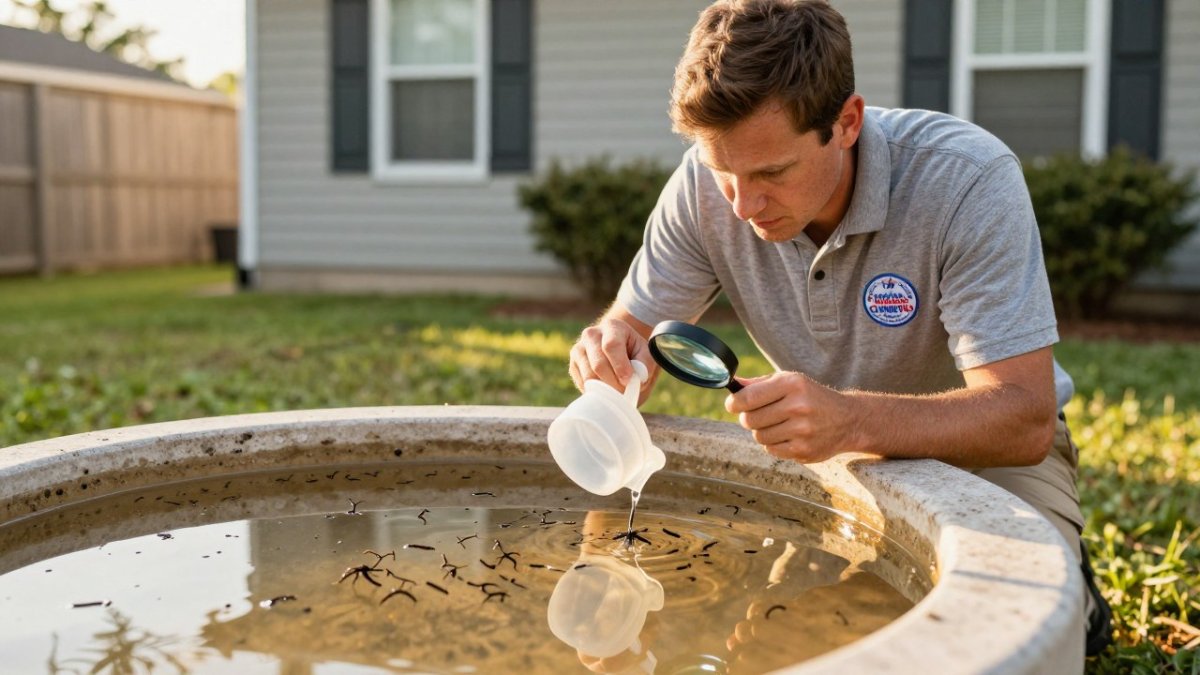
- Larval checks: dip a white cup into permanent water and look for wriggling larvae. Larvae present means your Bti timing or dosage needs attention.
- Source audit: re-walk your water list weekly and confirm nothing new is holding water.
Pollinator-Safe Timing and Application Precautions
When you do apply anything, protect pollinators with these safeguards:
- Apply at dawn before roughly 7 AM or at dusk after about 6 PM, when bees and butterflies are inactive and treatments can dry before they return.
- Never spray open blooms. Treat resting sites, eaves, fence lines, and dense shade instead.
- Check wind and rain. Skip application if rain is forecast within 24 hours or if drift could reach flowering plants or water.
A diagnosed, sequenced, and monitored plan protects your family, spares your pollinators, and tells you honestly whether what you are doing is working.
Getting Professional Mosquito Control for Your Pollinator Garden
When your own efforts aren't enough, professional help makes sense. The right provider understands pollinator safety and uses targeted methods.
Floridian Mosquito Control specializes in protecting both your family and your garden. We're licensed by the Florida Department of Agriculture and Consumer Services.
We focus on adult mosquito control and egg prevention without broad-spectrum damage, combining source reduction, targeted treatments, and ongoing monitoring.
When you're ready to move beyond DIY control, contact us for a consultation.
Frequently Asked Questions
Is there a mosquito killer that is safe for bees?
Yes. Bacillus thuringiensis israelensis (Bti), found in mosquito dunks, is safe for bees and other pollinators. Bti targets only mosquito larvae in water and breaks down naturally in the environment. Apply it only to water sources where mosquitoes breed, not to flowering plants or areas where bees forage. Avoid spraying during peak pollinator hours (dawn and dusk) and never use broad-spectrum insecticides in a pollinator garden.
Does removing standing water help control mosquitoes?
Removing standing water is the single most effective natural mosquito control method. Mosquitoes lay eggs in stagnant water, even small amounts in flower pots, rain barrels, or clogged gutters can produce hundreds of larvae. Eliminate or empty containers weekly, keep gutters clear, and drill drainage holes in plant saucers. For water features you cannot remove, use Bti to kill larvae before they mature into biting adults.
How can you reduce mosquitoes without harming pollinators?
Use integrated pest management: remove standing water first, encourage natural predators like dragonflies and bats, plant native species that attract beneficial insects, and apply targeted treatments only when necessary. Avoid broad-spectrum spraying. If you must treat, use Bti in water sources or apply essential-oil sprays in the evening after pollinators have stopped foraging. Professional natural mosquito control services can apply pollinator-safe products with precision timing.
Are mosquito-repellent plants effective in a garden?
Repellent plants like basil, lavender, rosemary, and mint have limited effectiveness on their own. Mosquitoes may avoid very dense plantings, but these plants will not eliminate the problem. They work best as part of a broader strategy that includes removing breeding sites and reducing resting places. Plant them around outdoor seating areas and doorways for modest additional protection, but do not rely on them as your primary control method.
Natural mosquito control for pollinator gardens requires planning and precision, but it works. Start by eliminating standing water. Use Bti where water must remain. Time your treatments for pollinator safety. Encourage natural predators. When you need professional support, choose a provider who understands your ecosystem. Floridian Mosquito Control is here to help you protect your family, your garden, and the pollinators that make it thrive. Call or text 813-433-3464 to discuss your property.