 How-to
Why Mosquitoes Come Back After Professional Fogging
Last Updated: October 28, 2026
Quick Summary
Mosquitoes often return after professional mosquito fogging because fogging knocks down only adult mosquitoes in open air, while protected resting sites, eggs, larvae, and adults flying in from untreated neighboring properties are not controlled. Fogging resets the adult population rather than providing a permanent fix.
- Fogging's residual on outdoor surfaces is measured in days, not months, and sun and rain speed its breakdown.
- Adults resting deep in hedges, under decks, in sheds, or in crawlspaces are often shielded from the mist.
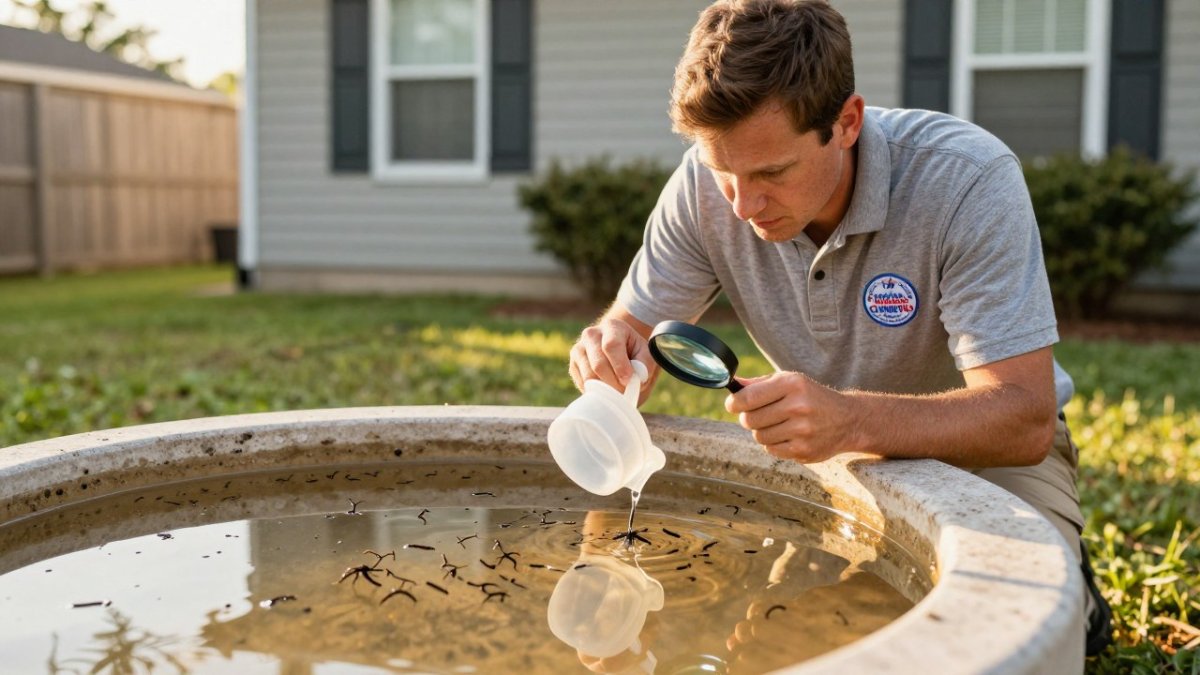
- Fogging does not reach eggs or larvae in standing water, so breeding sites must be removed.
- A rebound within 2-3 days points to resting sites or reinvasion; a rebound at 7-14 days points to breeding sources.
Table of Contents
- What Professional Mosquito Fogging Actually Does
- How Long Does Mosquito Fogging Last?
- Does Mosquito Fogging Kill Eggs and Larvae?
- Why Mosquitoes Return After Treatment
- How Weather and Conditions Affect Results
- Finding and Eliminating Breeding Sites in Your Yard
- Post-Treatment Checklist and Reducing Mosquitoes Between Visits
- Booking Your Next Treatment with Floridian Mosquito Control
- Frequently Asked Questions
What Professional Mosquito Fogging Actually Does
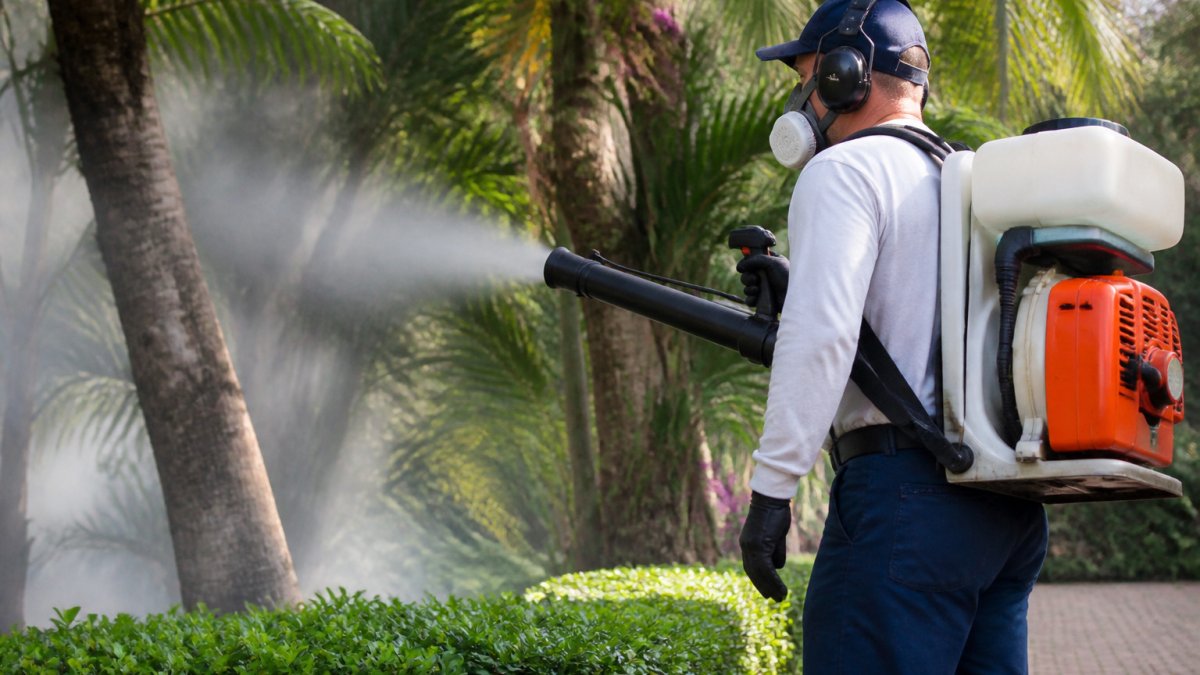
Professional fogging is a fast way to knock down the adult mosquitoes buzzing around your yard right now. At Floridian Mosquito Control, our licensed technicians provide mosquito fogging treatments. Understanding why mosquitoes return can help you evaluate treatment results.
Fogging is a treatment for adult mosquitoes, not a permanent fix.
Which Mosquitoes Fogging Targets
Fogging treatments are one of the mosquito control services Floridian Mosquito Control provides.
Floridian Mosquito Control also works to prevent egg hatching.
How Quickly Fogging Kills Adult Mosquitoes
Speed depends on weather, wind, and how thick the vegetation is. A calm evening with a thorough application works much better than a windy afternoon.
How Long Does Mosquito Fogging Last?
Think of each visit as resetting the count, not ending the problem. Regular treatment schedules keep the adult population lower between visits.
Does Mosquito Fogging Kill Eggs and Larvae?
Floridian Mosquito Control offers mosquito fogging treatments and works to prevent egg hatching.
Why Mosquitoes Return After Treatment
Mosquitoes may return after professional fogging. The following are possible factors to consider.
1. The insecticide has a short residual on outdoor surfaces
Fogging products are formulated to knock down mosquitoes on contact, not to sit on foliage for weeks. Once the mist settles, the active ingredient begins breaking down under sunlight, heat, and moisture. Most practitioners find that meaningful residual activity on outdoor surfaces is measured in days, not months, and that direct sun and rain accelerate the breakdown. That is why a fogging visit is best understood as resetting the adult population, not sealing the yard.
2. Protected resting sites never get touched
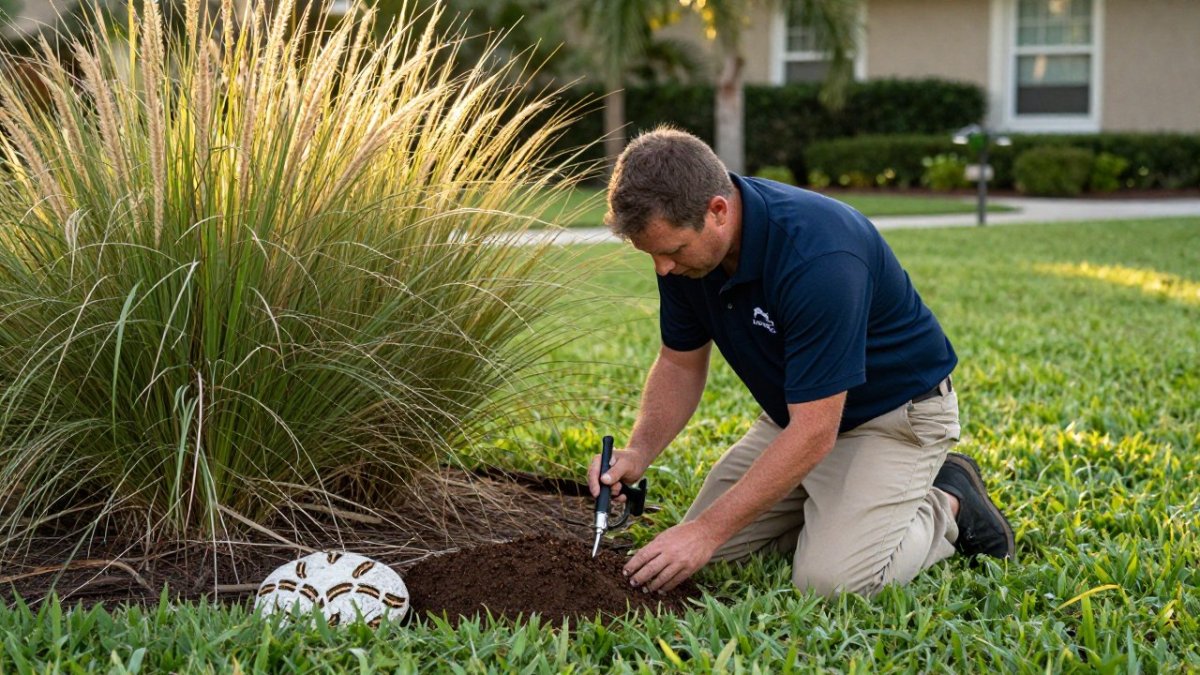
Fogging is a space treatment: the mist moves through open air and coats exposed surfaces. Mosquitoes resting deep inside dense hedge interiors, under decks, inside sheds, in crawlspaces, behind ivy, or beneath dense ground cover are shielded from the droplet cloud. Those survivors emerge at dawn and dusk and repopulate the yard within days. This is also why fogging does not reliably reach eggs and larvae sitting in water, the mist cannot penetrate water in any meaningful way.
3. New adults arrive from untreated neighboring properties
Mosquitoes do not respect property lines. A treated yard surrounded by untended lots, wooded edges, drainage ditches, or neighbors who do not treat will keep receiving adults blown in on the wind. A common pattern is a noticeable rebound within a week of treatment that traces to reinvasion rather than to survivors. This is the single biggest reason a well-executed fogging job can still look like it "didn't work."
4. The breeding cycle outpaces the treatment interval
Depending on species and water temperature, mosquitoes can move from egg to biting adult in roughly a week to ten days in warm weather. If standing water on or near the property is producing new adults faster than the service interval removes them, the population rebounds between visits. Warm, humid conditions speed this up; cooler weather slows it down. That is why the same monthly schedule can feel effective in spring and inadequate in the middle of a wet summer.
What fogging does and does not control
| Stage or situation | Does fogging control it? |
|---|---|
| Adult mosquitoes flying in open air during treatment | Yes, knockdown |
| Adults resting in exposed vegetation | Yes, if the mist reaches them |
| Adults deep in hedges, sheds, crawlspaces, dense ground cover | Poorly to not at all |
| Eggs on container walls above the water line | No |
| Larvae and pupae in standing water | No |
| Adults flying in from untreated adjacent properties after treatment | No |
How Weather and Conditions Affect Results
Timing helps too. Treatments timed for calm, dry evenings tend to perform better than those applied during storms or strong winds.
Finding and Eliminating Breeding Sites in Your Yard
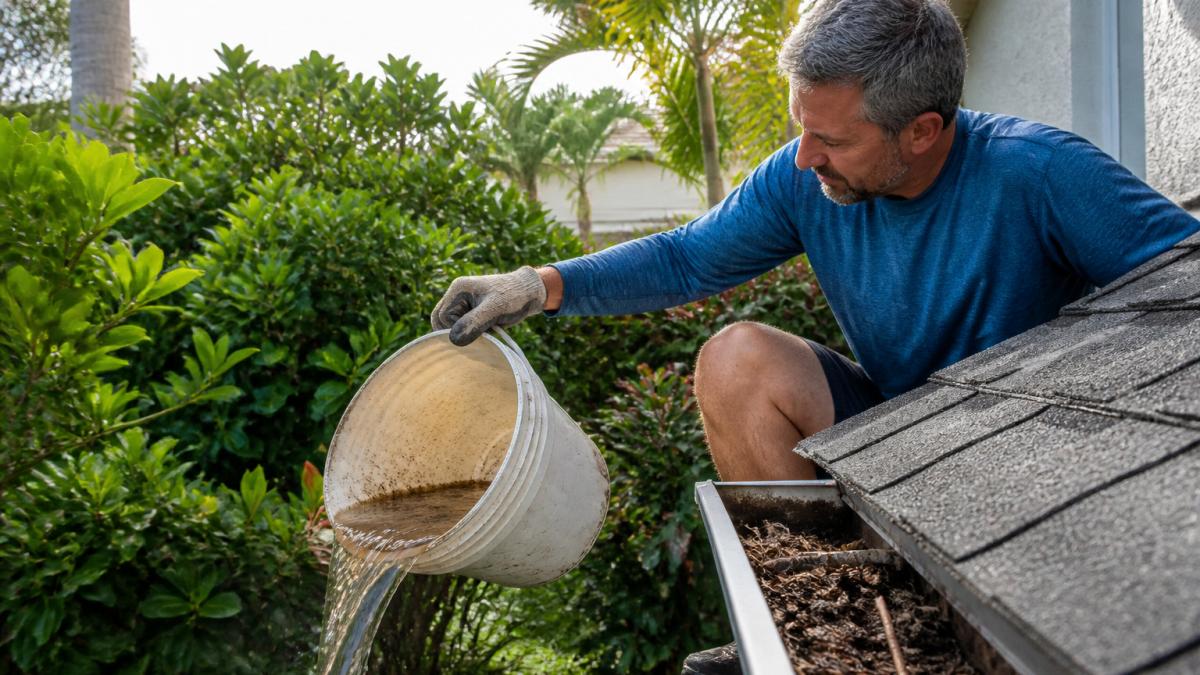
One homeowner in a typical Florida backyard often finds a clogged gutter or a forgotten bucket is the real source of the problem. Removing that single source can noticeably reduce how many mosquitoes return.
Post-Treatment Checklist and Reducing Mosquitoes Between Visits
Use this two-part framework: first diagnose why mosquitoes are back, then decide what to do about it. Working in that order prevents the most common mistake, paying for another fogging visit when the real problem is a breeding source or a coverage gap.
Step 1: Diagnose the return
- Timing of the rebound. Biting within 2-3 days points to protected resting sites or reinvasion. A rebound at 7-14 days points to breeding sources. No real drop at all points to an application problem.
- Standing water audit. Check gutters and downspouts, plant saucers, birdbaths, pet bowls, tarps, toys, tire swings, wheelbarrows, clogged drain lines, A/C condensate trays, and low spots in the lawn. Dump, scrub, or refresh anything holding water for more than a few days, scrubbing matters because eggs cling to container walls above the water line.
- Resting-site audit. Look for dense hedge interiors, tall grass, shaded ground cover, sheds, crawlspaces, and under-deck areas. These are the places a fogging cloud is least likely to reach.
- Neighbor and edge review. Note wooded edges, ditches, vacant lots, and untended neighboring yards. If the rebound tracks with wind direction or property edges, reinvasion is likely.
- Weather log. Record rain and high wind within 24-48 hours of the visit. Both shorten the effective window and are legitimate reasons a treatment underperforms.
Step 2: Verify treatment quality before you call it a failure
- The date and approximate time of the application, and whether conditions were calm and dry.
- Which areas of the yard were treated, perimeter only, or also the interior of the landscape, under decks, and around structures.
- Whether the technician noted any areas they could not treat (locked gates, dense plantings, standing water).
- What the product's labeled residual and reapplication interval are, and how that compares to your service schedule.
- When the rebound started relative to the visit, and whether rain or wind occurred in between.
Step 3: Reduce mosquitoes between visits
Fogging works best as one layer of an integrated mosquito management plan. Stack these between professional visits:
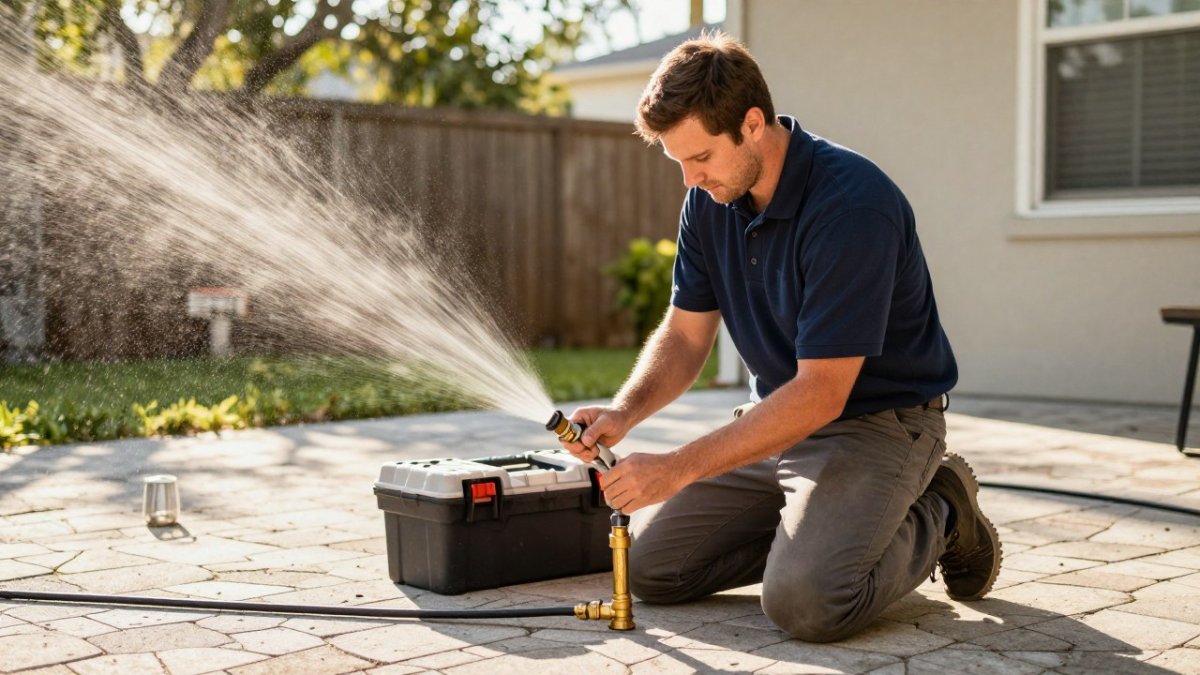
- Source reduction first. Weekly water dumps and gutter clearing remove the habitat that produces the next generation. Between visits, a misting system for homes can serve as an ongoing supplement to fogging. This is the highest-leverage habit a homeowner has.
- Habitat maintenance. Trim hedge interiors, mow tall grass, open shaded areas to sun and airflow, and clear leaf litter from drains.
- Larval control where appropriate. For water features or containers you cannot empty, ask your provider whether a labeled larvicide is appropriate for that site.
- Screens and barriers. Repair window and door screens, and keep doors closed during dawn and dusk activity peaks. For the outdoor areas where you spend time, natural repellent options for the backyard patio are a practical way to reduce bites between treatments.
- Treatment timing. Calm, dry evenings produce better results than windy afternoons; align visits with the forecast when possible.
- Consistent scheduling. A regular service interval keeps the adult population lower between visits, but it does not replace source reduction, the two work together.
Booking Your Next Treatment with Floridian Mosquito Control
Our locally owned and operated family business serves homes across the Tampa Bay area, including Pinellas and Hillsborough counties. Our full range of mosquito control services covers every stage of the problem, so you can see what is available before booking. We offer eco-friendly pest solutions, including 100% natural product options.
Call or text 813-433-3464.
Frequently Asked Questions
How long does mosquito fogging last?
Floridian Mosquito Control provides mosquito fogging treatments and works to control adult mosquito populations and prevent egg hatching.
Does mosquito fogging kill mosquito eggs?
Floridian Mosquito Control provides mosquito fogging treatments and works to prevent egg hatching.
Why are mosquitoes still around after fogging?
The verified facts do not specify why mosquitoes may return after fogging. Floridian Mosquito Control provides mosquito fogging treatments and works to control adult mosquito populations and prevent egg hatching.
What should I do if mosquitoes come back after treatment?
Contact your provider to discuss your concerns about mosquitoes returning after treatment.